Why a Custom Night Guard Is Worth the Investment
If you have been told you grind your teeth, you have probably come across two options at opposite ends of the spectrum. A cheap boil-and-bite guard from the pharmacy, or an expensive appliance from a dental office that takes multiple appointments and weeks of waiting.
What many people do not realize is that there is a third option that combines the quality of a professionally made guard with the convenience and affordability of ordering online. Before exploring that, it helps to understand what custom actually means and why it matters.
What Makes a Night Guard Custom?
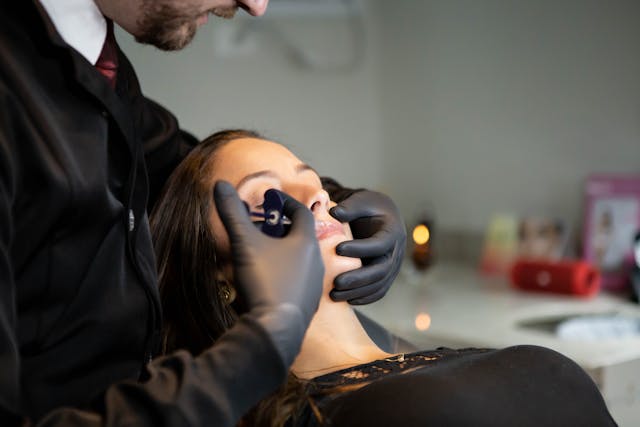
A custom night guard is made from a precise physical or digital impression of your teeth. That impression is sent to a certified dental lab, where technicians fabricate the guard to match the exact contours of your dental arch. The result is a guard that fits your teeth the way a tailored garment fits a body: snugly, comfortably, and without movement.
This precision matters for two reasons. First, a guard that fits properly stays in place throughout the night. A guard that shifts or feels loose is one you are likely to remove during sleep without realizing it. Second, precise fit means the guard maintains consistent contact across all the relevant surfaces, distributing force evenly rather than concentrating it on specific teeth.
How It Compares to Over-the-Counter Options
Over-the-counter night guards, the boil-and-bite variety available at pharmacies, use a thermoplastic material that softens in hot water and is then pressed against the teeth to take a rough impression. The fit it produces is approximate at best.
An approximate fit creates several problems. The guard may feel bulky or uncomfortable. It is more likely to shift during sleep, which reduces its protective function and increases the chance you will unconsciously remove it. And because the material is typically soft throughout, it may not be appropriate for heavy grinders or clenchers who would benefit from a harder, more stable surface.
Over-the-counter guards are also usually made from lower-grade materials than professional lab-produced guards, which affects both comfort and longevity.
The Different Types of Custom Guards
Custom guards are available in three main material configurations, each suited to different levels of grinding and different treatment goals.
Soft custom guards use flexible thermoplastic material throughout. They are the most comfortable from the first night and are well suited to light to moderate grinders. They are less appropriate for heavy clenchers, as the compressible material can increase jaw muscle engagement rather than reduce it.
Hard custom guards use rigid acrylic throughout. They provide a flat, stable biting surface that allows the jaw muscles to relax, making them the preferred option for moderate to severe grinding, jaw clenching, and TMJ-related issues. They require a short adjustment period but last significantly longer than soft guards.
Dual-laminate custom guards combine a soft inner layer for comfort with a hard outer layer for durability and jaw stability. This design is a strong middle ground for people who want the comfort advantage of a soft guard with the structural effectiveness of a hard one.
What a Custom Guard Actually Protects
The most obvious protection is enamel. Enamel is the hardest substance in the body, but it does not regenerate once it is worn away. Grinding creates concentrated friction on specific biting surfaces, and without a barrier, that friction gradually erodes the enamel layer. The consequences include increased sensitivity, a higher risk of cracking and chipping, and ultimately a greater need for restorative dental work.
Beyond enamel, a custom guard protects the jaw joint. By creating a stable platform and slightly repositioning the jaw, it reduces the compressive forces on the temporomandibular joint during sleep. This is particularly important for people who clench, since the forces generated by jaw clenching are often more damaging to the joint than grinding is to the teeth.
It also protects the investment of any existing dental work. Crowns, veneers, implants, and bridges are all vulnerable to grinding and clenching forces. A night guard extends the life of existing dental restorations significantly.
How the Online Custom Guard Process Works
The process for ordering a custom guard online is straightforward. After placing an order, an impression kit arrives by mail. The kit includes everything needed to take an accurate impression at home: dental putty, impression trays, and clear instructions. The completed impressions are mailed back to the provider, where they are evaluated and used to fabricate the guard in a certified dental lab. The finished guard is delivered within five to seven days in most cases.
The impressions taken at home using a quality kit produce results that are comparable to in-office impressions for the purposes of night guard fabrication. The materials and lab processes used are the same. The difference is the elimination of the dental office visit and its associated overhead.
How Long Does a Custom Night Guard Last?
With proper care, a custom hard or dual-laminate night guard typically lasts between two and five years. Soft guards have a shorter lifespan, particularly under heavy grinding, and may need replacing within six to eighteen months of regular use.
Proper care involves rinsing the guard after each use, cleaning it with a soft brush and mild soap rather than abrasive toothpaste, allowing it to dry before storing, and keeping it in its case away from heat. These steps take less than two minutes a day and significantly extend the life of the appliance.
What to Look for When Ordering
When evaluating any custom night guard provider, look for the following: the guard is fabricated in a NADL-certified dental lab, the impression kit is included with the order rather than sold separately, the provider offers a remake or adjustment guarantee if the fit is not right, and there is a clear process for selecting the appropriate material type based on your grinding severity.
A guard made by a certified lab from a quality impression is a meaningful investment in dental health. It costs a fraction of the dental work it prevents.