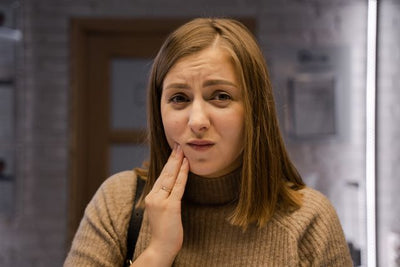
Most people who grind their teeth notice it gets worse during difficult periods. Before a major work deadline. During a relationship problem. After a difficult week. This is not a coincidence. Stress is one of the most well-documented triggers of nighttime bruxism. Understanding why this happens does not make the grinding stop, but it does change how you approach managing it, and what to do about the symptoms it creates.
Why Stress Triggers Grinding
During periods of psychological stress, your nervous system stays in a state of heightened activation. This is sometimes called the fight-or-flight response, though in modern contexts it usually looks more like persistent low-level tension than an acute emergency. Part of this activation carries into sleep. Your brain does not fully switch off the arousal response when you close your eyes, which means the muscular tension that stress creates during the day continues overnight. For many people, that tension expresses itself through jaw clenching and teeth grinding. Research consistently shows that people with higher perceived stress levels have higher rates of sleep bruxism. It is also one reason why grinding often appears or worsens during life transitions, work intensification, or periods of personal difficulty.
The Physical Symptoms You Are Experiencing
The jaw muscles involved in grinding are among the strongest in the body relative to their size. When they work involuntarily through the night, the effects are felt in a predictable set of places.
Morning jaw soreness and stiffness
This is usually the first symptom people notice. The masseter muscle, which runs along the jaw, aches after hours of involuntary contraction. [Internal link: Morning Jaw Pain: Causes and How to Fix It]
Tension headaches
The temporalis muscle, which runs along the side of the skull, is also involved in clenching. Sustained tension there translates directly into headache pain, often described as a tight band around the forehead and temples. [Internal link: How Teeth Grinding Causes Headaches]
Tooth sensitivity and wear
Enamel does not regenerate. Grinding gradually removes it, which increases sensitivity to temperature, and in severe cases changes the shape and height of teeth. This damage is cumulative and largely irreversible. [Internal link: Signs You Grind Your Teeth at Night]
Disrupted sleep
Bruxism episodes fragment sleep architecture, which means the quality of sleep is reduced even when the total hours look normal. This creates a cycle: poor sleep increases stress reactivity, which worsens grinding, which worsens sleep.
Does Reducing Stress Stop the Grinding?
Sometimes, partially. People who go through a high-stress period and then return to normal often find their grinding reduces on its own. But this is not reliable. There are a few reasons for this. First, the habit of bruxism can become ingrained independently of the original trigger. Second, many people maintain low-level stress as a baseline that is enough to sustain grinding even without an acute stressor. Third, for some people bruxism has an underlying neurological component that stress amplifies but does not fully cause. This is why addressing stress is useful but not usually sufficient on its own. Stress management techniques including exercise, sleep consistency, and therapy all reduce bruxism frequency in research settings. But the most reliable way to protect your teeth in the meantime is a night guard.
What Actually Helps
A custom night guard
A night guard does not stop grinding. It absorbs the force so your teeth do not. This is the most important distinction. The grinding continues but the damage does not. [Internal link: Night Guard for Bruxism] For people with stress-related bruxism, this protection is especially important during high-stress periods when grinding intensity tends to peak.
Jaw muscle relaxation before sleep
Simple techniques done in the ten minutes before bed can reduce the baseline tension your jaw carries into sleep. Rest the tip of your tongue lightly against the roof of your mouth with lips closed and teeth slightly apart. This is the physiologically relaxed jaw position, and practising it creates some separation between teeth during the moments before sleep.
Reducing caffeine in the afternoon and evening
Caffeine extends nervous system activation into the night. Cutting off caffeine after 2pm consistently reduces sleep bruxism frequency in people for whom it is a contributor.
Exercise earlier in the day
Physical exercise reduces circulating cortisol and improves the depth of sleep. Both effects reduce bruxism. The timing matters: vigorous exercise within two to three hours of bed can increase rather than decrease arousal.
Discussing it with a professional
For people with significant bruxism, particularly if jaw pain, headaches, or tooth damage are present, a dentist and sometimes a physician should be involved. In some cases, short-term muscle relaxants or specific physiotherapy exercises make a meaningful difference. Night guards and lifestyle changes are the first line, but they do not have to be the only tools.
The Practical Priority
You may not be able to eliminate stress. But you can make sure it is not destroying your teeth in the process. If you know your grinding correlates with stress and you do not currently wear a night guard, starting now is the most straightforward protective step available to you. The damage stress-related bruxism causes is cumulative. Every night without protection is a night of wear you cannot get back. [Internal link: Do I Need a Night Guard? Signs You Should Get One]